

What’s up? — 3D Printer Provides Options
—Sterling Frank, Senior Park Aide, OHV Partnership and Special Events Outreach, Interpretation and Education Division
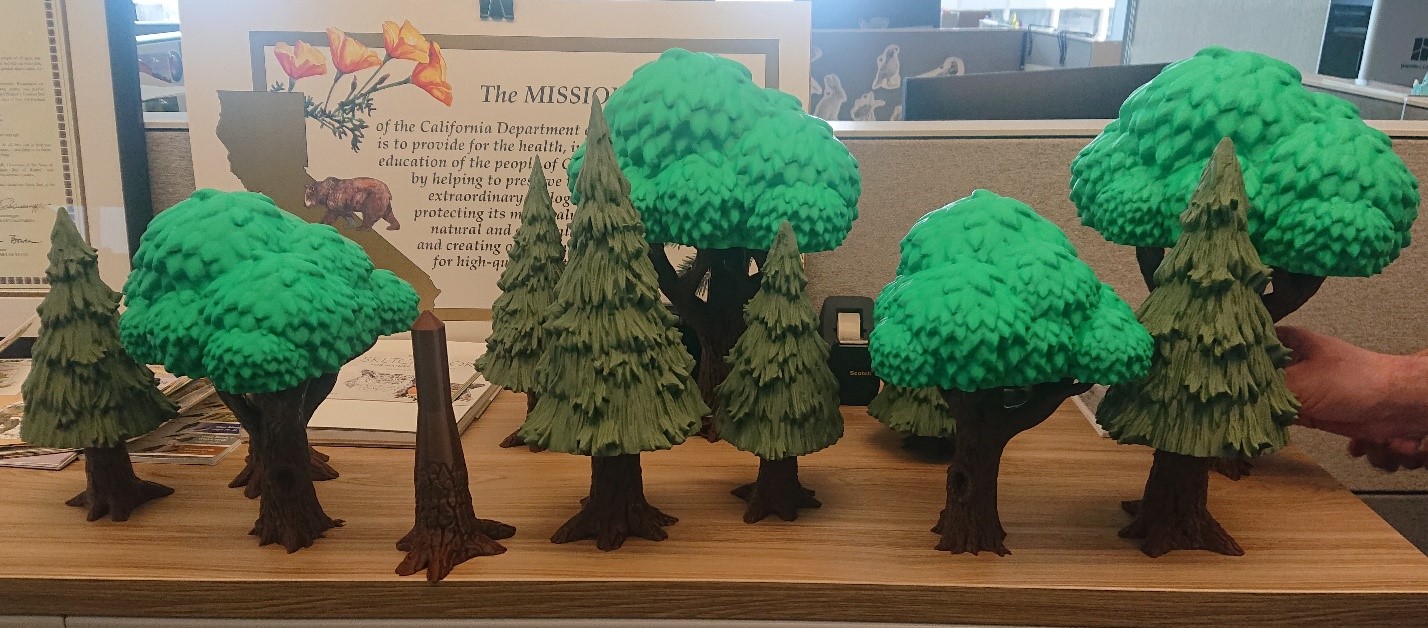
The I&E Division purchased a Bambu Labs H2S 3d printer late last year. This printer is able to print in a variety of materials (get ready for chemistry class) useful to interpreters in the field.
Polyactic Acid or PLA, a plastic filament material, and Polyethylene Terephthalate Glycol-modified filament, or PETG, are both good for cheap, fast prints and are the most common filaments used. PETG is slightly more durable and UV/heat resistant than PLA. Nylon and Acrylonitrile Butadiene Styrene or ABS have high durability and tensile strengths but cost more and take longer to print. Thermoplastic Polyurethane or TPU is a flexible and rubber-like material. It is also possible to get carbon fiber or glass reinforced versions of these materials which will add qualities of impact resistance and strength.
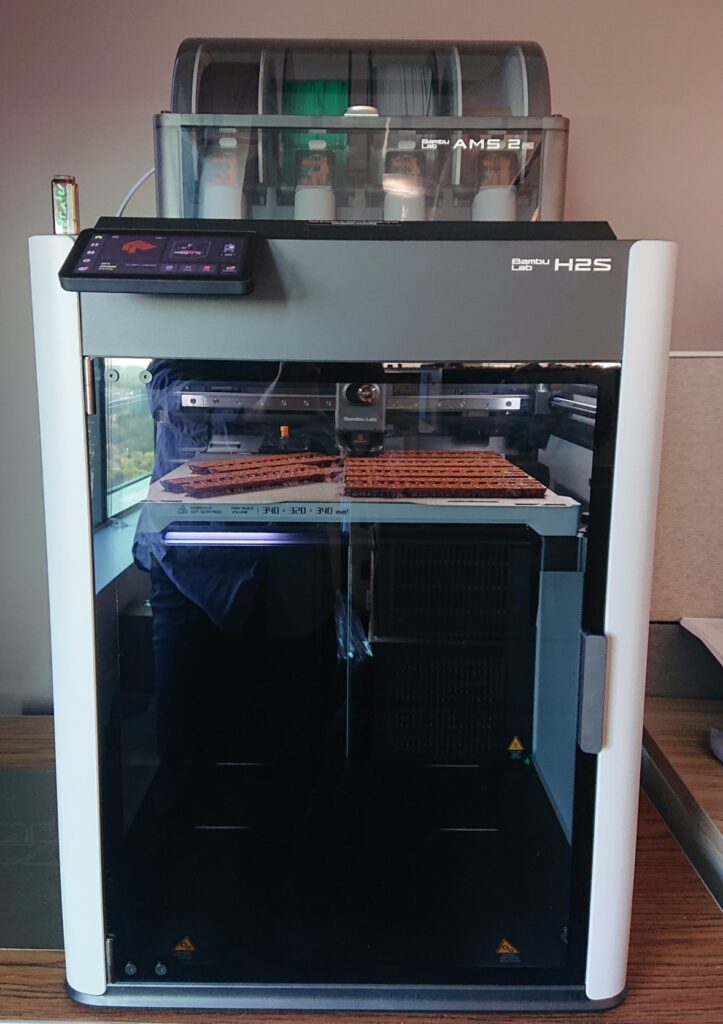
The Bambu H2S 3D Printer Making Miniature Logs
The printer has a large print bed measuring 320mm x 340mm x 340mm. This allows printing of 1-piece models slightly larger than a cubic foot in size, or you can do what our OHV outreach team did and go really big. They printed a 1/24 scale sand dune, measuring almost 4 feet across, by taking a larger model and breaking it up into smaller, printable pieces that fit together using small, printed connectors — kind of like LEGO!
At the time of this writing, the 3D printer has produced brochure holders, replica animal skulls and skeletons, various species of trees, and a multitude of rocks and other obstacles for the OHV outreach team’s “Tread Lightly” RC vehicle course. In the near future we plan to print models of microscopic organisms at a scale for children to hold, making learning about something you can’t normally see easier. A related project will create small aquatic arthropods at their true size so they can be models for learning without people getting their feet wet.
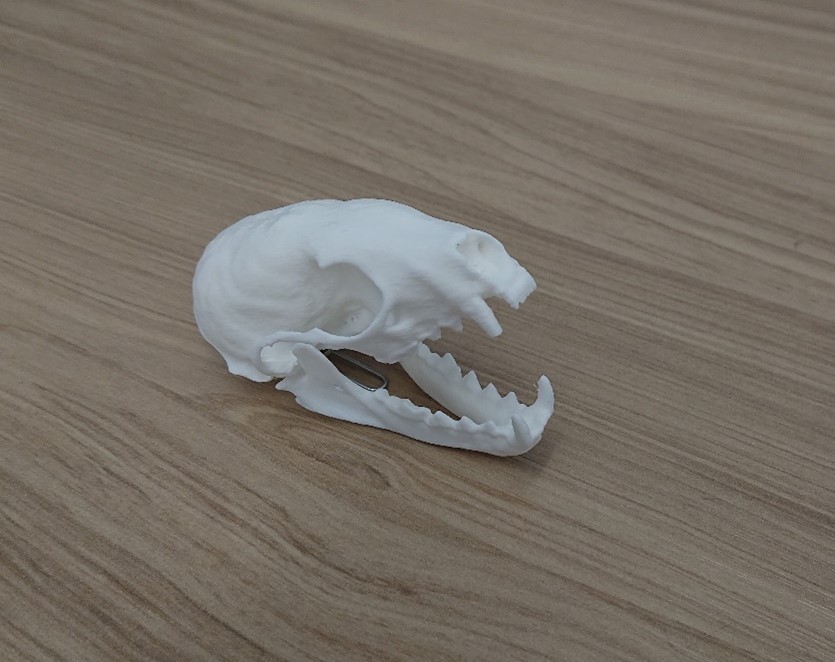
First Attempt at Printing a Pine Marten Skull
While not capable of creating museum quality replicas, the printer is a great way of making handheld objects that might otherwise be too delicate, expensive or impossible for people to experience without damaging them. Let us know your ideas and we will try to make them a reality. If you already have a 3D model, load it into Bambu studios to create a g-code file, save it to a thumb drive and print it yourself. If you have any questions or want help getting started with a project, please reach out to Kevin.schmidt@parks.ca.gov.