What’s up? — NEW Natural Resource Interpretation Training
—Cleo Domingo, Climate and Environmental Literacy Coordinator, Interpretation and Education Division; Julie Ira, Parks California Climate Fellow, Interpretation and Education Division
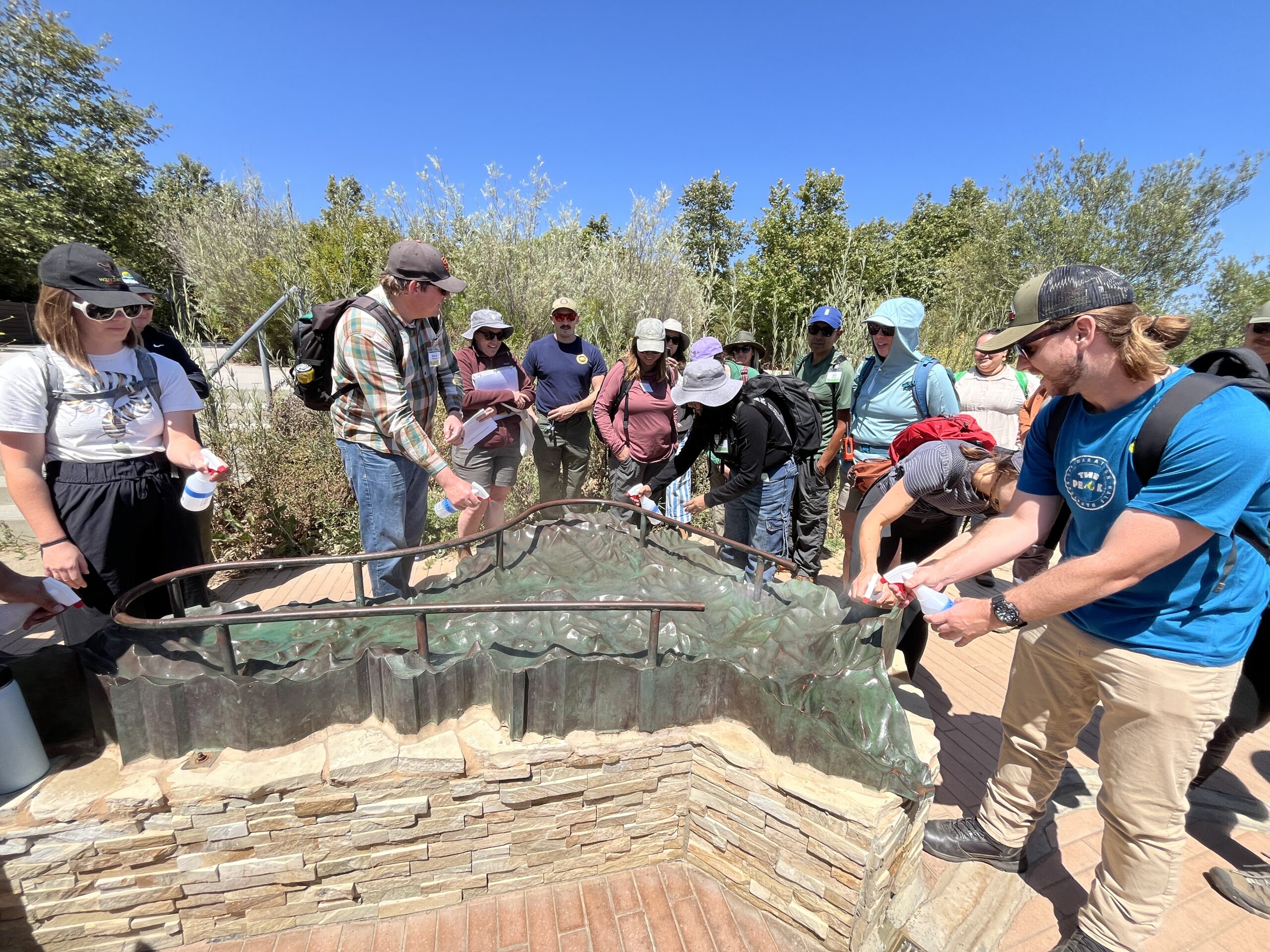
Over the last four months, State Parks’ Interpretation and Education Division launched a new and improved Natural Resource Interpretation (NRI) Training with the goal for participants to strengthen their knowledge of California natural resources, climate communication best practices, and inquiry-based interpretive techniques to spark curiosity and promote stewardship of park lands. The entire course supported 92 learners and featured 33 expert trainers and guest speakers, for a total of 125 participants.
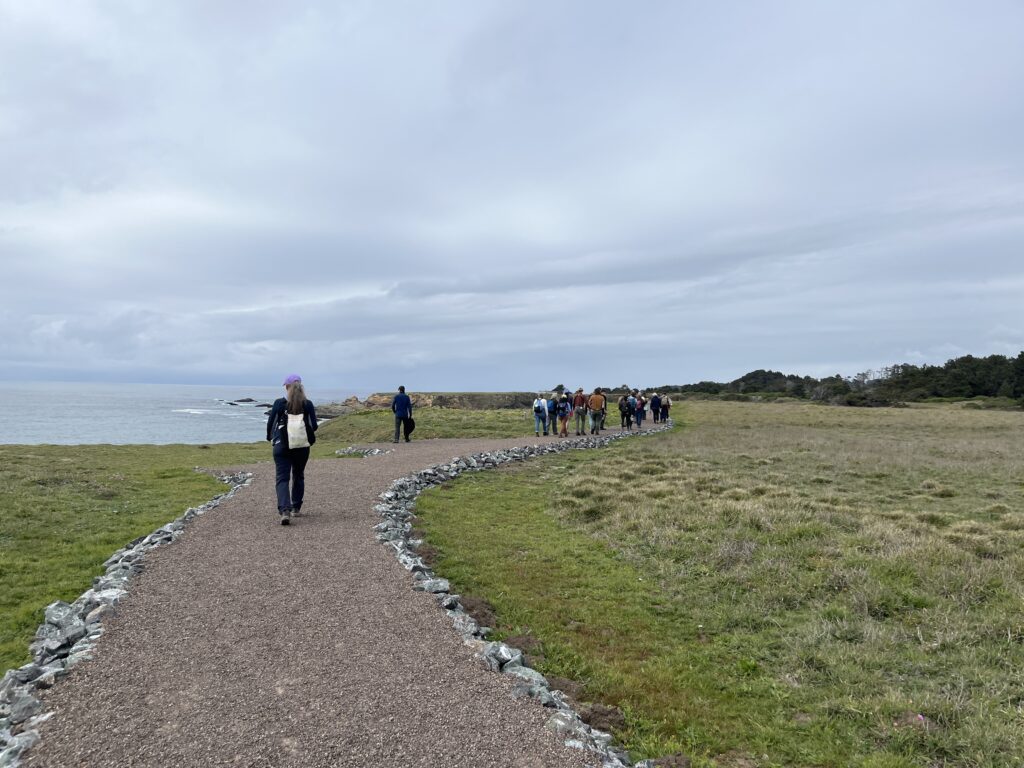
The North Coast cohort explored geologic history and coastal interpretation at Jug Handle State Natural Reserve.
This hybrid training included two online cohorts in January and February, and three in-person workshops hosted at Columbia State Historic Park, Mendocino Woodlands State Park, and Malibu Creek State Park. The online sessions focused on learning about California’s natural resources and climate change communication techniques and working on updating interpretive program outlines to adhere to the new Climate and Environmental Interpretation Guidelines. The in-person workshops gave participants the opportunity to learn more about their specific region’s natural resources and put science communication techniques into practice. Each workshop incorporated lessons from the National Network for Ocean and Climate Change Interpretation (NNOCCI), helping participants build skills in effective climate communication and audience engagement: “NNOCCI trainings have taught me how to incorporate conversations around climate change into my programs and visitor interactions,” noted an online participant.
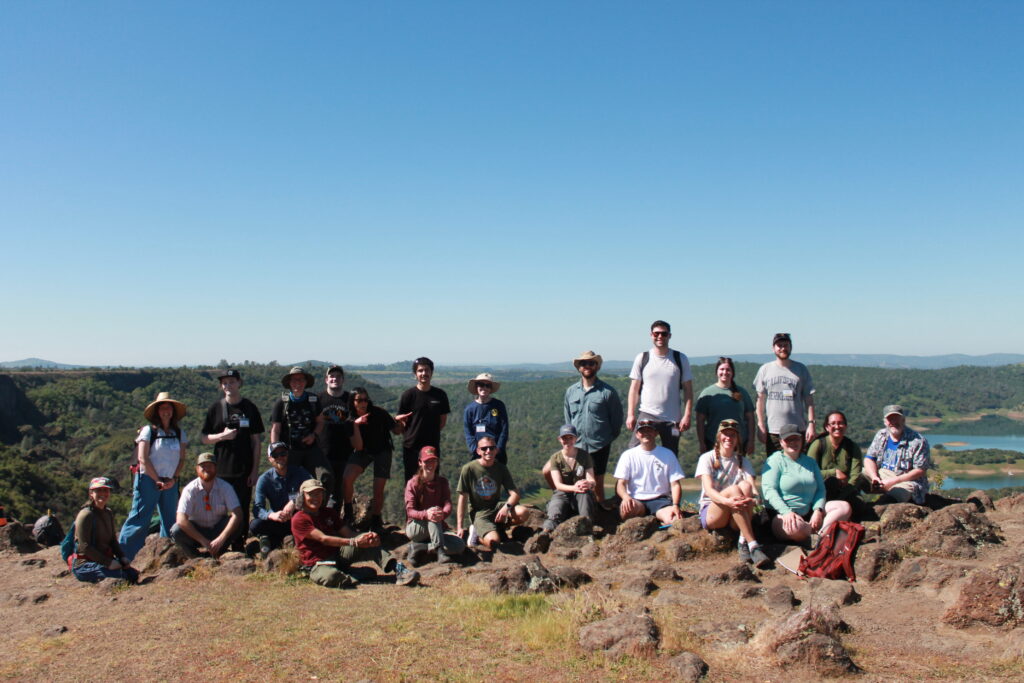
The inland Mountains and Valleys cohort explored fire, water, and geology in the Gold Country, including a hike at Table Mountain near Jamestown.
A highlight of the in-person workshops was time spent outdoors, connecting learning to place through engaging field experiences. During the Inland Mountains and Valleys’ regional workshop in March, participants explored the Stanislaus River watershed with hikes at Table Mountain Trail overlooking New Melones Reservoir and ventured to the upper watershed to learn from fire experts at Calaveras Big Trees State Park. April’s North Coast and Mountains regional workshop explored multiple watersheds including the Big River watershed in the redwoods of Mendocino Woodlands State Park. The cohort ventured north to Fort Bragg’s Noyo Center Marine Field Station to learn about marine research and restoration and explored the Ecological Staircase Trail and beach at Jug Handle State Natural Reserve. The South Coast and Mountains regional workshop gathered the first week of May to explore the Malibu Creek watershed from the mountains to the beach and visited the new Wallis Annenberg Wildlife Crossing to better understand the importance of habitat connectivity.
In addition to the structured workshop, in-person workshop participants had the opportunity to host and partake in extracurricular activities beyond training hours – from night hikes to morning yoga to evening Zumba. Throughout this course, participants appreciated the opportunity to connect with other interpreters, learn and practice new skills, and experience new parts of California. A North Coast and Mountains workshop participant commented, “From the field trips to the lessons to the extracurriculars, everything was amazing!” Thank you to Parks California and the Cannabis Watershed Protection Program for funding this training!