
Explore Where the Rivers Meet
—Brandon Caskey, State Park Interpreter II, Statewide PORTS Program Coordinator, Interpretation and Education Division
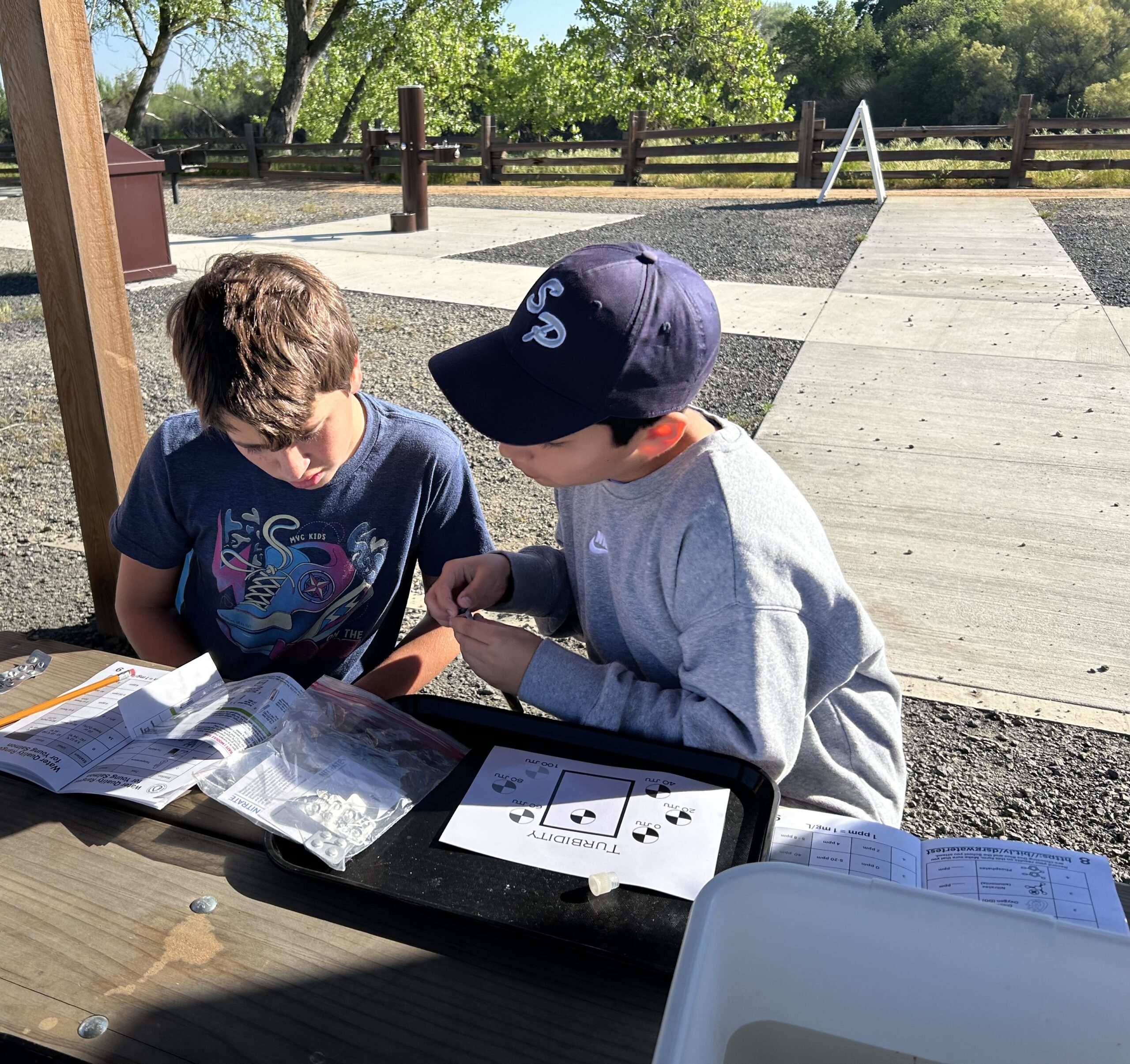
At Dos Rios State Park, a new pilot program is showing what is possible when parks and educators work together to create meaningful access to the outdoors for students. Led by local interpretive staff and the PORTS Team, in partnership with the Stanislaus County Office of Education, the program brings underserved students from local schools to Dos Rios State Park for hands-on field investigations focused on water quality, habitat health, and environmental stewardship.
The project is supported by Julian Morin and Caitlin Torres from Dos Rios State Park, Brandon Caskey and Brad Krey from the PORTS Team, and Jose Marquez and Charles Taylor from the Stanislaus County Office of Education. Together, they have helped create a model for how parks and local education partners can work together to provide impactful learning experiences for K–12 students.
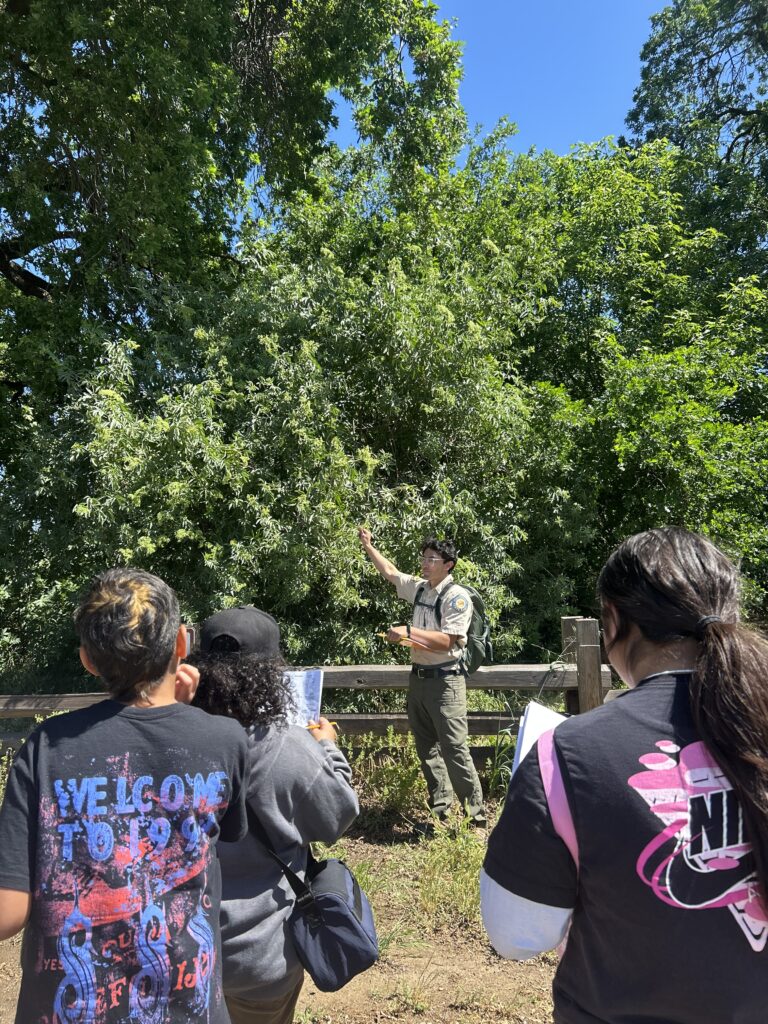
Students learn about riparian vegetation at Dos Rios State Park
A key part of the pilot began before students even stepped into the park. Teachers participated in a full-day professional development session to help design the curriculum for the field trips. Their input helped ensure the learning was relevant, engaging, and connected to both classroom goals and local environmental issues. It also highlights the value of parks partnering with County Offices of Education, which bring deep instructional expertise, resources, and strong connections to schools.
Transportation support also played a vital role. Bus funding was provided through the passPORTS Program with support from the California Association for Leading Innovation in Education (CALIE), helping remove one of the most common barriers to park access for students.
Students from Grayson Elementary, Shiloh Elementary, and Chrysler Elementary visit the park to investigate a central question: Is the freshwater ecosystem found at Dos Rios healthy enough to support Chinook Salmon? To explore that question, students participate in two field science stations. At one station, they collect macroinvertebrates from a pond fed by the Tuolumne River and observe them with hand lenses and microscopes. Through pair-shares, students discuss what they notice and wonder, while learning how the diversity of macroinvertebrates can reveal the health of a freshwater ecosystem. At the second station, students conduct chemical water tests, examining phosphates, nitrates, dissolved oxygen, pH, turbidity, and temperature to determine whether the water in the Tuolumne River is ideal for salmon.
Students also document their learning in nature journals by recording observations and drawing the macroinvertebrates they find. A nature walk and bioblitz activity follow, using maps and quadrants to help students observe and document biodiversity and better understand the landscape around them.
The learning does not stop at the water’s edge. As a result of their investigations, students identify environmental challenges and develop action projects that address issues within their schools, neighborhoods, or communities.
This pilot demonstrates the power of outdoor learning to inspire curiosity, build scientific thinking, and foster stewardship. It also offers a strong example for other State Park districts seeking to partner with County Offices of Education to create more equitable access to meaningful environmental learning.
At Dos Rios State Park, two rivers meet, and through this partnership, so do education and opportunity.